How To Move a Washing Machine
Moving a washing machine can be one of the hardest jobs during a house relocation. With the average unit weighing around 150 pounds (70kg), it’s heavy, awkward, and easy to damage if not handled correctly. Many DIY movers underestimate the challenge, and improper lifting causes thousands of back injuries in the UK every year.
In this guide, we’ll show you how to disconnect, prepare, transport, and reinstall your washing machine safely. Whether you’re moving it yourself or hiring professional movers, these tips will help you avoid costly mistakes.
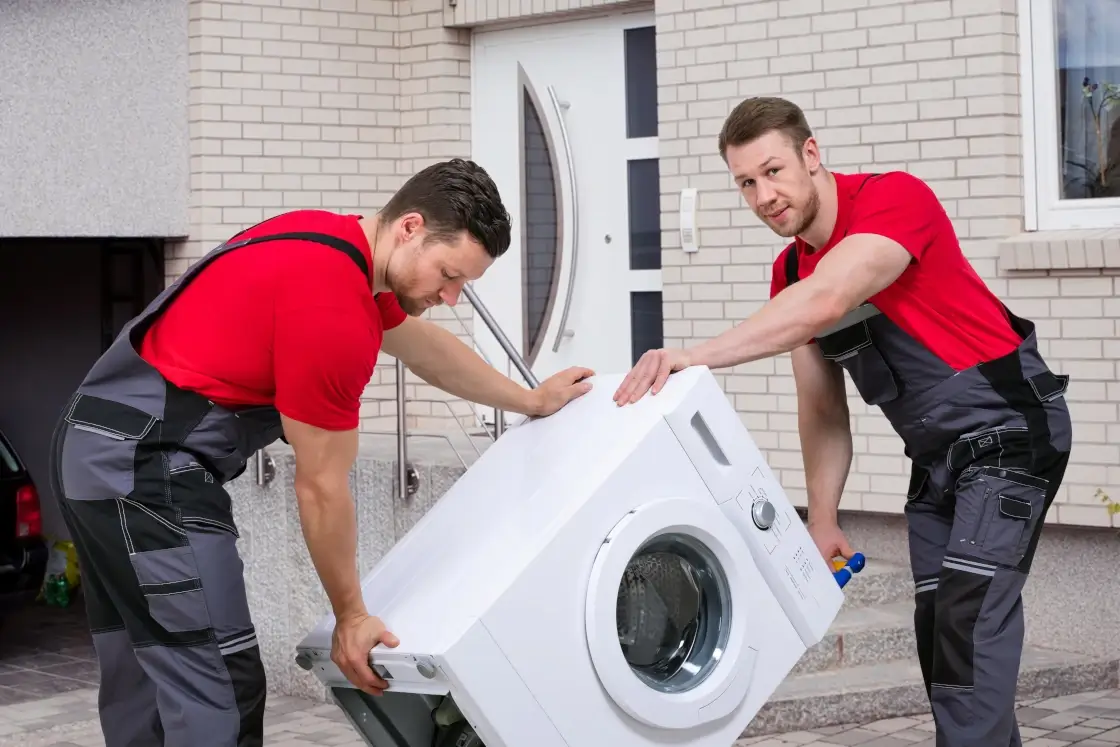
Summary
- Moving washing machine preparations
- What tools do you need to move a washing machine?
- Cleaning before transporting the washing machine
- Moving the machine out safely
- What are washing machine transit bolts?
- Lifting and transporting the waching machine
- How to strap and load a washing machine into a van
- Reinstalling the washing machine in your new home
- Moving from a front-loading vs a top-loading washing machine
- What do to if your washing machine is damaged
- FAQs about moving a washing machine
Moving Washing Machine Preparations
One of the biggest mistakes people make is trying to move a washing machine without properly preparing it first. Residual water inside hoses and the drum can leak during transport, damaging floors, vehicles, or other belongings. At the same time, internal components such as the drum are not designed to move freely and can be damaged if left unsecured.
-
Turn off water and power – unplug the machine and shut off water valves before touching hoses.
-
Disconnect water hoses carefully – drain excess water into a bucket or towel to avoid spills.
-
Remove the drain hose – lift it out from the wall connection or pump and allow water to empty.
-
Secure the drum – insert transit bolts or use padding like towels to prevent movement.
What Tools Do You Need to Move a Washing Machine?
Having the correct equipment makes the process much safer and easier. Make sure these items are ready before you start:
-
Adjustable wrench – for disconnecting hoses.
-
Pliers – to handle small clips or fittings.
-
Bucket & towels – to collect leftover water.
-
Cleaning supplies – to clean the space once the machine is out.
-
Moving dolly or hand truck – to transport the machine safely.
-
Transit bolts – to protect the drum.
-
Appliance straps or bungee cords – to secure the load in the van.
-
Gloves – to protect your hands during lifting.
Cleaning Before Transporting The Washing Machine
Skipping the cleaning process may not seem like a major issue, but it can lead to unpleasant results after the move. Washing machines often contain detergent residue, lint, and moisture, which can create odours or even mould if left sealed during transport. This becomes more noticeable when the appliance is unused for several days.
Before moving, clean the exterior and remove any residue from the detergent drawer and drum. Leave the door open for a few hours to allow the interior to dry completely. This simple step ensures the machine remains hygienic and ready for use once installed in your new home.
Moving the Machine Out Safely
Washing machines are usually installed in tight spaces, making removal more difficult than expected. Pulling the appliance out without preparation can damage surrounding cabinets, scratch flooring, or cause sudden shifts that make the machine harder to control. The risk increases when water hoses are still partially connected or trapped behind the unit.
To avoid this, create a smooth surface beneath the machine before moving it. Placing cardboard or a protective sheet under the feet reduces friction and allows you to slide it forward more easily. Move the machine slowly, keeping it upright and stable at all times. Ensuring hoses are fully disconnected and clear of the back prevents unnecessary spills or resistance.
Related Post: Floor protection during house move tips
What Are Washing Machine Transit Bolts?
Transit bolts are special fasteners that lock the drum in place during transport. Without them, the drum can shift and cause internal damage.
-
Always reinstall transit bolts before moving.
-
If you don’t have them, you can buy replacements in the UK from Currys, Argos, Amazon, BuySpares, or eSpares.
-
Remove the bolts again before using the machine in your new home.
Lifting and Transporting the Washing Machine
Attempting to carry a washing machine manually is one of the most common causes of injury during a move. The weight distribution makes it difficult to balance, and sudden movements can easily lead to strain or loss of control. This is especially dangerous on stairs or uneven surfaces.
The safest method is to use a dolly or hand truck and move the appliance with at least two people. Keep the machine upright and move slowly, especially when navigating tight spaces or steps. Clear all pathways in advance to avoid obstacles, and communicate clearly with anyone assisting you to maintain control throughout the process.
💷 Instead of the physical struggle, why not hire a low-cost man and van near you? This service can cost around £70–£100.
If the washing machine is not the only item you want to move, and there is more, use our free moving costs calculator to get a moving estimate and plan your budget.
How to Strap and Load a Washing Machine into a Van
Once the machine is out of the house, securing it properly in the vehicle is essential.
-
Keep the washing machine upright at all times – never lay it flat.
-
Use straps or bungee cords to secure it tightly against the van wall.
-
Add padding or blankets to prevent scratches and movement.
-
Do not place heavy boxes on top of the appliance.
Reinstalling the Washing Machine in Your New Home
Reinstallation is often treated as a simple step, but incorrect setup can lead to leaks, instability, or poor performance. Uneven placement or loose connections can cause the machine to vibrate excessively or fail during use.
To install correctly, position the washing machine on a level surface and adjust the feet until it is stable. Remove the transit bolts before use, reconnect the water supply securely, and ensure the drain hose is properly positioned. Once everything is connected, run a short test cycle to check for leaks and confirm the machine is functioning correctly.
Moving Front-Loading vs Top-Loading Washing Machines
Different washing machine types require slightly different handling.
-
Front-loading machines: Heavier and more delicate. The door seal is prone to damage, so secure carefully. Always use transit bolts.
-
Top-loading machines: Generally lighter and easier to manoeuvre, but still must be kept upright.
-
Both types: Need to be strapped in place during transit to avoid drum damage.
What to Do If Your Washing Machine Is Damaged
Despite careful preparation, damage can occasionally occur during a move. When this happens, the way you respond can determine whether you are able to recover the cost of repairs or replacement. Many people delay reporting issues, which can complicate claims.
If you notice damage, document it immediately with clear photos and detailed notes. Contact your removal company as soon as possible and review the terms of your agreement. Most UK removal companies require claims to be submitted within a specific timeframe, so acting quickly is essential. Keeping all documentation organised will help support your case.
FAQs About Moving a Washing Machine
Can I move a washing machine without transit bolts?
It is possible, but not recommended. Without securing the drum, there is a higher risk of internal damage during transport.
How heavy is a typical washing machine?
Most washing machines weigh between 60–80kg, making them difficult to handle without proper equipment.
Can I lay a washing machine on its side?
No, it should always be transported upright to avoid damaging internal components and fluid systems.
Do removal companies move washing machines?
Yes, most professional movers can handle appliances, but it’s important to confirm this when booking.
Should I disconnect the washing machine myself?
You can, but if unsure, it’s safer to have a professional handle the disconnection to avoid leaks or damage.
Need Help Transporting the Washing Machine?
Find local moving professionals if you need help moving the washing machine and other large appliances or furniture.